
شیوه
چاکس کالینز

After Eden: Chuks Collins and the Art of Becoming
Words by Tessa Shaw
Chuks Collins doesn’t introduce himself as a fashion designer. He calls himself an artist, someone for whom clothing is simply one of many languages. این تمایز مهم است. It explains why his Spring/Summer 2026 مجموعه, Eden Re-Imagined, feels less like a seasonal offering and more like a meditation: on rebirth, on survival, on the long, uneven work of becoming yourself.
Born in Coventry and raised between England and Nigeria, Collins grew up in motion. “My life was very, very different from everybody,” او می گوید. “I would live three years in England, three years in Nigeria… I hated it. I didn’t have friends, because I had to always change.” There were foster parents in England, a strict grandmother in Nigeria, and an early lesson in how unstable a home can be.
این مادرخوانده بود که با آموزش خیاطی به او مسیر زندگی را تغییر داد. تا دوازده, اولین کت و شلوارش را درست کرده بود. هنر هم فرار شد و هم اکسیژن. “هنر همیشه برای من وسیله بیان بوده است, حتی در میان هرج و مرجی که در کودکی داشتم,” او توضیح می دهد. وقتی خانواده شکست می خورد, سوالات هویتی, و عصبانیت نوجوان بیش از حد شد, او شروع به کشیدن کرد, ساختن دنیاهای تاریک, جهان های کارتونی, زندگی های جایگزینی که او می توانست پایان را کنترل کند.
هنوز, مد شغلی نبود که اطرافیانش آن را تشویق کنند. “این حرفه مردانه قابل احترامی نبود,” او می گوید. بنابراین او در عملی ترین راه تصحیح بیش از حد انجام داد: سه مدرک لیسانس - حسابداری و مالی, کار اجتماعی, و هنرهای زیبا - گواهینامه خلبانی, و در نهایت انتقال به ایالات متحده. برای مدرسه مد و کارشناسی ارشد در روابط بین الملل در Fordham, تمرکز بر جوانان و توسعه اقتصادی. مسیر مانند چندین زندگی روی هم قرار گرفته است, اما برای کالینز, همه وصل می شود. خدمات, ساختار, پرواز, مراقبت, ایجاد; این همه مواد خام برای لباس است.
وقتی الان از کارش صحبت می کند, زبان به طور خلع سلاح صمیمی است. پیوند کلیه او را به آمریکا آورد; یک الگوی طولانی از بحران های بهداشتی شکل فوری او را ایجاد کرده است. “من تجربیات نزدیک به مرگ را با سلامتی پشت سر گذاشته ام,” او می گوید. “تقریباً مثل این است که چهار سال همه چیز خوب پیش برود, و دو سال آینده من در حال مبارزه با چیزی هستم. هر قطعه ای که من خلق می کنم مانند داستانی است که از احساسم در آن زمان خاص تعریف می کنم.”
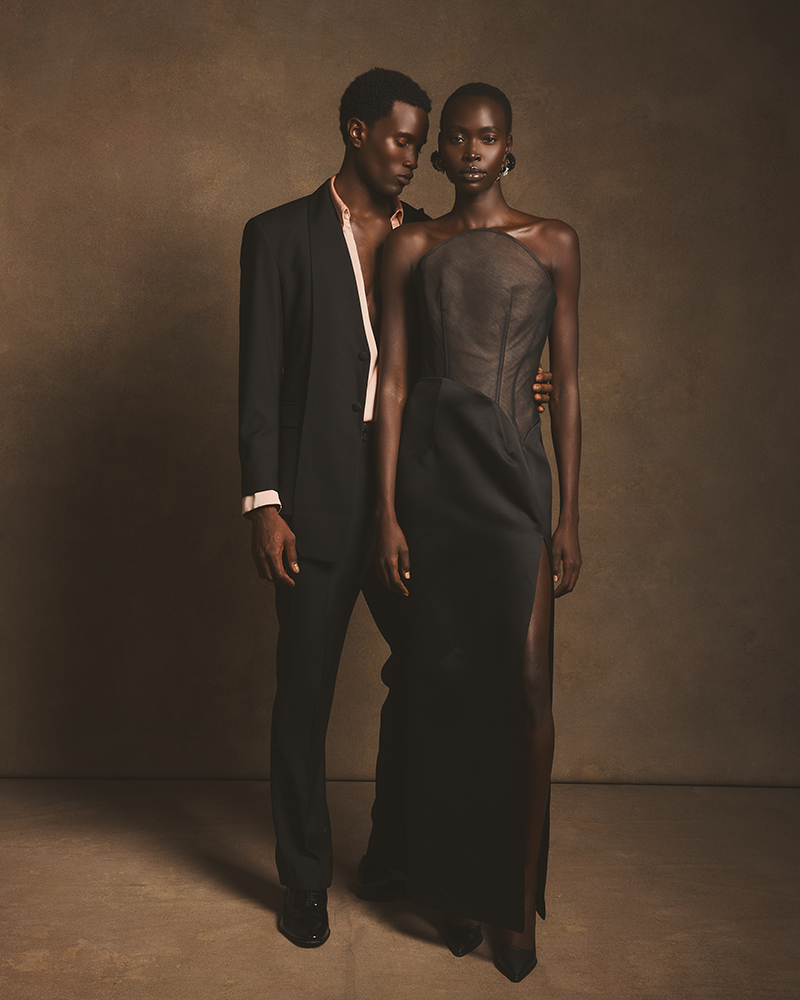
این حس بقا و بازجویی از خود در قلب آن قرار دارد Eden Re-Imagined, unveiled off-season at Bryant Park Grill in New York. Collins reworks the biblical Eden not as punishment but as a pivot point—a before-and-after moment of consciousness. Inspired by the instant of awakening, the collection reads Eden “not as exile, but as the beginning of consciousness. The moment humanity chooses to see itself fully,” with sculptural tailoring, fluid drapery, and a palette that moves from soft neutrals and earthen tones to urgent greens and reds.
“برای من, Eeden Re-Imagined is the moment after awakening, when we understand both our light and our consequence,” Collins says. “I wanted to capture that tension, the quiet strength that comes from choosing to rebuild rather than retreat.” It’s a statement that could double as a synopsis of his own life. The collection’s sustainable textiles and hand-finished details extend his interest in conscious making. هنوز, the emotional charge comes from somewhere deeper, which is his refusal to romanticize pain without also insisting on transformation.
Collins describes clothing as “an armor that we wear… the first thing people see in us.” That frame carries a specific weight when you are a Black man designing in an industry that still defaults to white and male at the top. “Being a Black man in fashion, there’s a lot of stereotypes of what people want to expect,” he notes. “My brand is a bridge between Western and African fashion. I grew up in both places, and those are the things I infuse in my collection because that’s who I am.”
New York sharpened that perspective. When he first moved to the city, he would ride the subway from one end of the line to the other to watch how style shifted from borough to borough. English tailoring, Nigerian sculptural volume, Bronx swagger, he absorbed it all. “I bring English tailoring to my clothing, I bring color from Africa to my designs,” او می گوید. “I think I dabble between a fine line of ethereal and architecture… You can see a piece that has corsets in it, but when it moves, you see a whole fluid drapery.” If the technical language is about cut and construction, the emotional language is about care. Collins’ work is rooted in women—the ones who raised him, believed in him, housed him, handed him his first sewing machine, and wore his earliest pieces. “I design for the girl in every woman and the woman in every girl,” او می گوید, “که آرزوی سفیر شدن را دارد, یک دکتر, یک وکیل, یا حتی یک زن خانه دار” او هر زن را از سه دریچه می بیند: دختر, خواهر, شریک. “اینها زنانی هستند که من هر روز با آنها در ارتباط هستم. مادرم را هم در آنها می بینم.”

در باند فرودگاه, که به بازیگری تبدیل می شود که بی سر و صدا فانتزی باریک اندازه نمونه مد را رد می کند: مدل های باردار, زنی که بچه اش را حمل می کند, بدنهای سایز بزرگ که فضای مشترکی با سایز دو و چهار دارند. “کارهای کوچکی که می توانید انجام دهید کمک زیادی می کند,” او می گوید. “فکر نکن کمه” برای کالینز, تنوع یک کلمه تبلیغاتی نیست; این گسترش سپاسگزاری است. “زنان فقط مرا بالا برده اند,” ساده می گوید. “بنابراین توانمندسازی آنها و ساختن لباس های زیبا نه فقط برای سایز دو و چهار, اما برای زنان واقعی که با دیدن آنها بزرگ شدم, برای من بسیار مهم است”
Social responsibility shows up off the runway, بیش از حد. Alongside a friend, he co-founded the African Fashion Council to amplify African designers on global platforms, helping bring 7 African brands onto the official New York Fashion Week calendar. In Lagos, he’s opened an atelier connected to a nonprofit that trains survivors of domestic violence, a tribute to his mother’s own history. Patterns are drafted in New York, then sent to Nigeria, where a growing team of artisans executes resort pieces and print-driven looks that loop the brand’s supply chain back home.
All of this, health battles, diaspora movement, advocacy, spiritual questioning, feeds into his definition of fashion as service. “Each time I’m able to put something together, bring something to life, it gives me so much,” او می گوید. “The higher level of joy is when somebody puts it on… When I see them feel empowered through my creation, it’s bliss for me. At the end of the day, it’s my calling to be of service to people.”
Looking ahead, Collins is thinking like an ecosystem, not just a label. After a strategic rebrand, his goals are clear: to build brand awareness and scale with intention. را Eden Re-Imagined collection launches the Eden Bag in apple leather, signaling a deeper push into accessories. There is a home line, bridal and bags on the horizon, plans for a permanent New York space after his residency at Berkeley College, renewed presence in England, and expanding production in Lagos. He’s collaborating on costumes for an upcoming series, developing a Pan-African fashion and food expo, and quietly imagining a return to teaching. “من همه را نمی دانم,” او می گوید. “من یک عمر دانشجو هستم”
در دستان کالینز, عدن بهشت گمشده نیست بلکه آغازی است که بازپس گرفته شده است. این مکانی است که با دانش بیشتر از آن خارج می شوید, زخم های بیشتر, مسئولیت بیشتر, و نوع جدیدی از لطف. لباس ها آن داستان را سبک حمل می کنند: لباس های برش مغرضانه که مانند نفس حرکت می کنند, خیاطی با ستونی از معماری, زرهی که احساس لطافت دارد. آنها برای زنانی ساخته شدهاند که چیزی را تجربه کردهاند و هنوز هم تصمیم میگیرند از آن خارج شوند, کاملا بیدار, به دنیا.