
Mòd
CHUKS COLLINS

Apre Edenn: Chuks Collins ak atizay pou vin
Pawòl pa Tessa Shaw
Chuks Collins pa prezante tèt li kòm yon designer mòd. Li rele tèt li yon atis, yon moun pou ki rad se tou senpleman youn nan anpil lang. Sa distenksyon enpòtan. Li eksplike poukisa Spring/Ete li a 2026 koleksyon, Edenn re-imajine, santi mwens tankou yon ofrann sezon ak plis tankou yon meditasyon: sou renesans, sou siviv, sou long la, travay inegal pou vin tèt ou.
Li te fèt nan Coventry ak leve soti vivan ant Angletè ak Nijerya, Collins te grandi nan mouvman. “Lavi mwen te trè, trè diferan de tout moun,” li di. “Mwen ta viv twazan nan Angletè, twa ane nan Nijerya... Mwen te rayi li. Mwen pat gen zanmi, paske mwen te oblije toujou chanje.” Te gen paran adoptif nan Angletè, yon grann strik nan Nijerya, ak yon leson byen bonè nan ki jan enstab yon kay kapab.
Li te Marenn sa a ki tou dousman chanje kou nan lavi l 'nan anseye l' koud. Pa douz, li te fè premye kostim li yo. Atizay te vin tou de chape ak oksijèn. “Atizay te toujou yon mwayen ekspresyon pou mwen, menm nan mitan dezòd mwen te genyen lè mwen te timoun,” Li eksplike. Lè fanmi ka zo kase, kesyon idantite yo, ak kòlè adolesan te vin twòp, li te kòmanse desine, bati mond nwa, linivè desen ki pi ba, lavi altènatif kote li te kapab kontwole fen a.
Toujou, mòd pa t 'yon karyè nenpòt moun bò kote l' ankouraje. “Se pa t yon pwofesyon gason respektab,” li di. Se konsa, li twòp korije nan fason ki pi pratik: twa diplòm bakaloreya-kontablite ak finans, travay sosyal, ak bèl atizay—yon lisans pilòt, epi evantyèlman yon mouvman nan peyi Etazini. pou lekòl alamòd ak yon metriz nan relasyon entènasyonal nan Fordham, konsantre sou jèn ak devlopman ekonomik. Chemen li tankou plizyè lavi sipèpoze, men pou Collins, li tout konekte. Sèvis, estrikti, vòl, swen, kreyasyon; li nan tout matyè premyè pou rad yo.
Lè li pale de travay li kounye a, langaj la se dezameman entim. Yon transplantasyon ren mennen l 'nan Amerik la; yon modèl long nan kriz sante te fòme ki jan ijan li kreye. “Mwen te pase eksperyans tou pre lanmò ak sante,” li di. “Se prèske tankou mwen pral gen kat ane nan tout bagay ale byen, ak de ane kap vini yo mwen ap batay yon bagay. Chak pyès mwen kreye se tankou yon istwa m ap rakonte kijan m santi m nan moman an patikilye.”
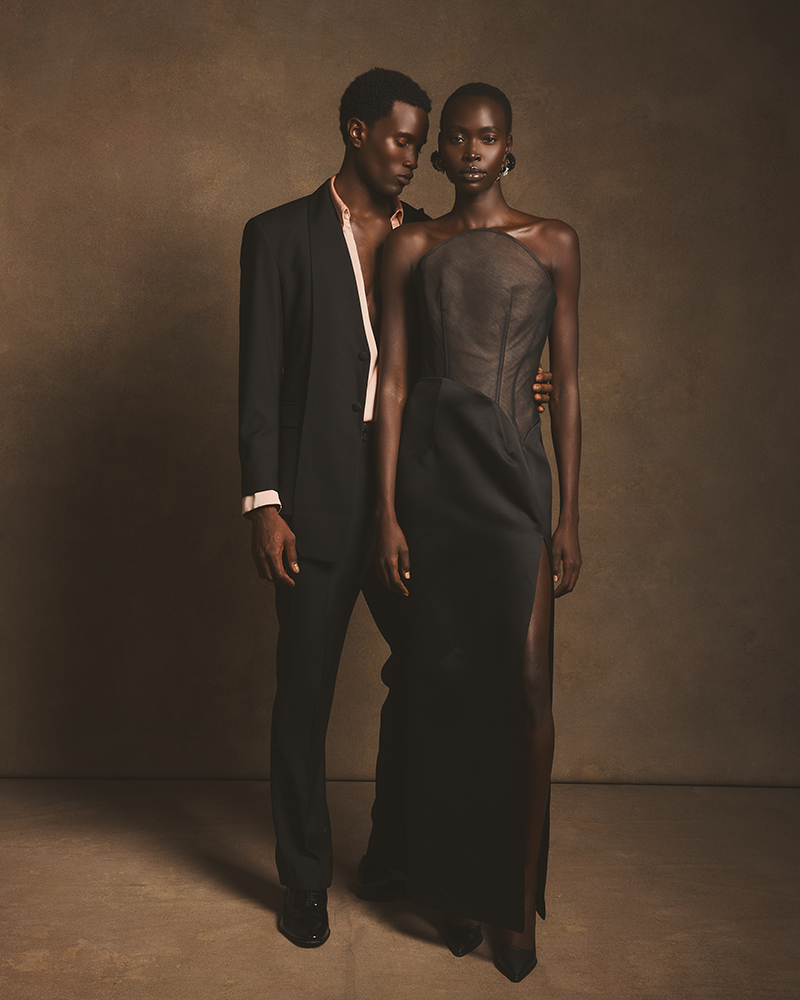
Sa a sans de siviv ak pwòp tèt ou-entèwogasyon chita nan kè a nan Edenn re-imajine, te revele nan sezon an nan Bryant Park Grill nan New York. Collins retravay Edenn biblik la pa kòm pinisyon men kòm yon pwen pivot—yon moman konsyans anvan ak apre.. Enspire pa enstantane nan Awakening, koleksyon an li Edenn “pa tankou ekzil, men kòm kòmansman konsyans. Moman sa a limanite chwazi wè tèt li konplètman,” ak adapter eskilti, twal likid, ak yon palèt ki deplase soti nan netral mou ak ton tè nan vèt ijan ak wouj.
“Pou mwen, Eeden re-imajine se moman apre reveye, lè nou konprann tou de limyè nou ak konsekans nou an,” Collins di. “Mwen te vle pran tansyon sa a, fòs trankil ki soti nan chwazi rebati olye ke fè bak.” Li se yon deklarasyon ki ta ka double kòm yon rezime pwòp lavi li. Tekstil dirab koleksyon an ak detay men-fini pwolonje enterè li nan fè konsyan. Toujou, chaj emosyonèl la soti nan yon kote ki pi fon, ki se refi li pou romantize doulè san yo pa ensiste tou sou transfòmasyon.
Collins dekri rad kòm “yon zam ke nou mete... premye bagay moun wè nan nou.” Ankadreman sa a pote yon pwa espesifik lè ou se yon nonm Nwa k ap desine nan yon endistri ki toujou par blan ak gason nan tèt la.. “Pou ou kab vin yon nonm Nwa alamòd, gen anpil estereyotip sou sa moun vle atann,” li note. “Mak mwen an se yon pon ant mòd Lwès ak Afriken. Mwen te grandi nan tou de kote, ak sa yo se bagay sa yo mwen pénétrer nan koleksyon mwen an paske se ki moun mwen ye.”
New York egwize pèspektiv sa a. Lè li te premye deplase nan vil la, li ta monte tren an soti nan yon bout nan liy lan nan lòt la pou gade jan style chanje soti nan borough a borough.. Adapte angle, Nijeryen volim eskilti, Bronx swagger, li te absòbe tout bagay. “Mwen pote tailor angle a rad mwen, Mwen pote koulè soti nan Lafrik nan desen mwen yo,” li di. “Mwen panse ke mwen dable ant yon liy amann nan etere ak achitekti ... Ou ka wè yon moso ki gen korse nan li., men lè li deplase, ou wè yon drapery likid antye.” Si lang teknik la se sou koupe ak konstriksyon, langaj emosyonèl la se sou swen. Collins’ travay anrasinen nan fanm—sa yo ki te leve l, te kwè nan li, te loje l, remèt li premye machin a koud li, epi li mete premye pyès li yo. “Mwen konsepsyon pou ti fi a nan chak fanm ak fanm nan chak ti fi,” li di, “ki anvi vin yon anbasadè, yon doktè, yon avoka, oswa menm yon madanm marye.” Li wè chak fanm atravè twa lantiy: pitit fi, sè, patnè. “Sa yo se fanm yo mwen kominike avèk chak jou. Mwen wè manman m nan yo tou.”

Sou pist la, ki tradwi nan Distribisyon ki tou dousman rejte fantasy etwat echantiyon-gwosè mòd la: modèl ansent, yon fanm ki pote pitit li, kò plis gwosè pataje espas ak gwosè de ak kat. “Ti sa ou kapab fè kontribye anpil,” li di. “Pa panse li piti.” Pou Collins, divèsite se pa yon mo kanpay; li se yon ekstansyon rekonesans. “Fanm te sèlman leve m ',” li di tou senpleman. “Se konsa, pèmèt yo ak fè bèl rad pa sèlman pou gwosè de ak kat, men pou fanm reyèl mwen te grandi wè, trè enpòtan pou mwen.”
Responsablite sosyal parèt sou pist la, tròp. Akote yon zanmi, li te ko-fonde African Fashion Council pou anplifye konsèpteur Afriken yo sou platfòm mondyal yo, ede pote 7 Mak Afriken yo sou kalandriye ofisyèl Semèn Fashion New York la. Nan Lagos, li te louvri yon atelier ki konekte ak yon san bi likratif ki fòme sivivan vyolans domestik, yon omaj pou pwòp istwa manman l. Modèl yo ekri nan New York, Lè sa a, voye nan Nijerya, kote yon ekip atizan k ap grandi egzekite moso resort ak aparans ki baze sou enprime ki boukle chèn ekipman pou mak la tounen lakay yo..
Tout bagay sa yo, batay sante, mouvman dyaspora, defans, kesyon espirityèl, nouri nan definisyon li nan mòd kòm sèvis. “Chak fwa mwen kapab mete yon bagay ansanm, pote yon bagay nan lavi, li ban mwen anpil,” li di. “Nivo ki pi wo nan kè kontan se lè yon moun mete li sou... Lè mwen wè yo santi yo otorize atravè kreyasyon mwen an, se bonheur pou mwen. Nan fen jounen an, se apèl mwen pou m sèvi moun.”
Gade devan, Collins ap panse tankou yon ekosistèm, pa sèlman yon etikèt. Apre yon rebranding estratejik, objektif li yo klè: pou konstwi konsyans mak ak echèl ak entansyon. A Edenn re-imajine koleksyon lanse Eden Bag la nan kwi pòm, siyal yon pouse pi fon nan Pwodwi pou Telefòn. Gen yon liy lakay ou, Bridal ak sak sou orizon an, plan pou yon espas pèmanan New York apre rezidans li nan Berkeley College, prezans renouvle nan Angletè, ak agrandi pwodiksyon nan Lagos. Li ap kolabore sou kostim pou yon seri k ap vini an, devlope yon ekspozisyon alamòd ak manje Pan-Afriken, epi tou dousman imajine yon retou nan ansèyman. “Mwen pa konnen tout bagay,” li di. “Mwen se yon etidyan pou lavi.”
Nan men Collins, Edenn se pa yon paradi pèdi men se yon kòmansman reprann. Se yon kote ou soti ak plis konesans, plis mak, plis responsablite, ak yon nouvo kalite favè. Rad yo pote istwa sa alalejè: abiye patipri-koupe ki deplase tankou souf, adapter ak yon kolòn vètebral nan achitekti, zam ki santi tankou tandrès. Yo bati pou fanm ki te viv nan yon bagay epi yo toujou chwazi soti, konplètman reveye, nan mond lan.