

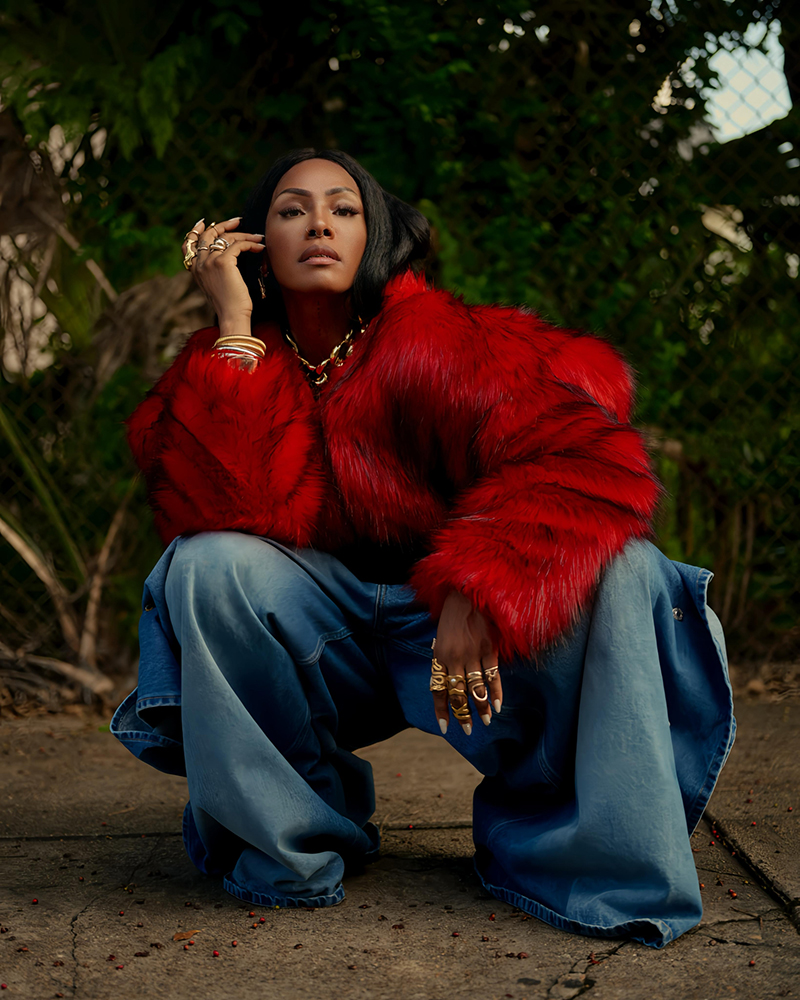
With her latest album, Creole Culture, Dawn Richard explores the music, language, and cultural histories that shaped her, creating a deeply personal portrait of New Orleans and the legacy she hopes to leave behind.
Written by Teneshia Carr
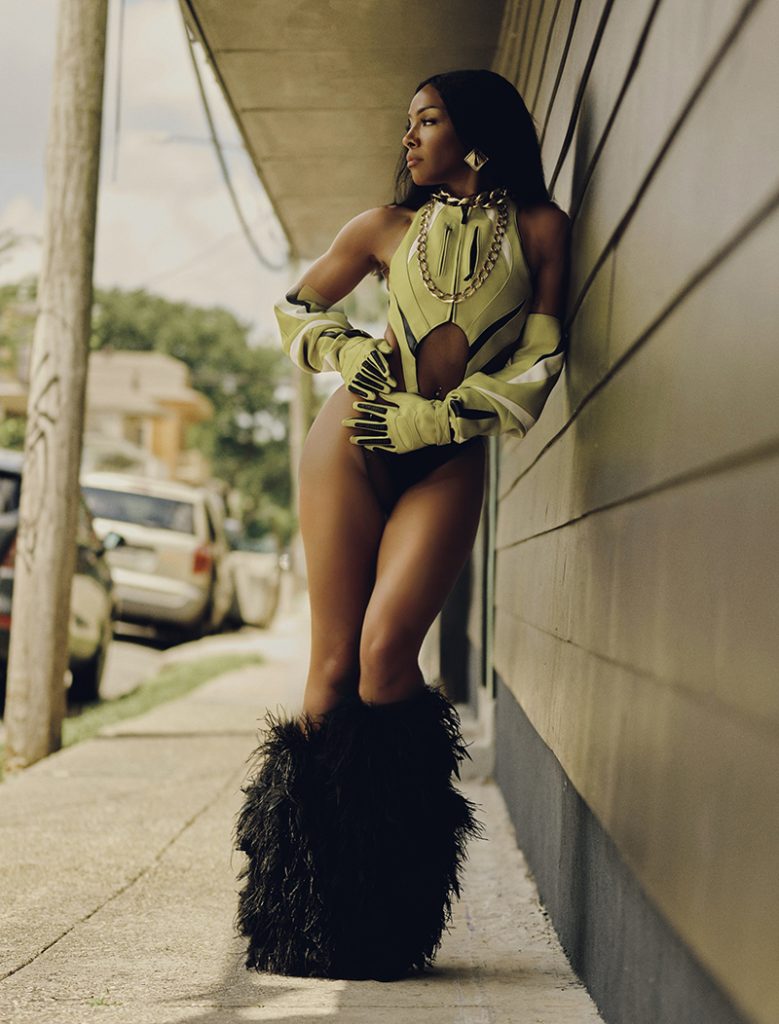
There’s something about New Orleans that people have always been drawn to. Maybe it’s the music spilling into the streets, the food carrying so many generations of history, or the unmistakable energy of a city that has given so much to American culture. People travel from around the world hoping to experience a little of that magic, often without fully understanding the communities that created it. For singer-songwriter Dawn Richard, who was born and raised in New Orleans, that distinction has become increasingly important. Her hometown is celebrated worldwide, yet much of its cultural history remains overlooked. “Everyone comes to New Orleans to get whatever that feeling is they feel when they go there,” she tells me. Richard has been thinking about what it means to come from a place whose influence extends far beyond its borders, especially as parts of its culture slowly disappear. She mentions Kouri-Vini, the endangered Louisiana Creole language, and the importance of preserving traditions that have survived generations. Her latest album, Creole Culture, released through Merge Records last month, is her most personal exploration of those ideas yet.
“I don’t think I’ve been as flagrant in saying this is where I’m from. This is what I represent,” she explains. “It’s always been through the headdress or through my fashion. It’s never been this plain to see.”
For much of her career, Richard has resisted the expectations placed on artists who find early success in mainstream music. First introduced to audiences through Danity Kane and later Diddy–Dirty Money, she has since established herself as one of alternative R&B’s most adventurous voices, moving between electronic experimentation, elaborate visual storytelling, and high-octane performances. Yet her willingness to exist outside conventional musical categories has sometimes left her feeling disconnected from the traditional image of a New Orleans artist. “Coming up in New Orleans, I felt almost isolated because I was so different than the traditional viewpoint of what New Orleans looked like,” she recalls. “But I am very much a New Orleans girl. I wanted people to understand we can look many different ways.”
That desire has informed her work for years. Her 2019 album New Breed explored New Orleans through the experiences of her father, Frank Richard, a musician associated with the funk group Chocolate Milk, while Second Line drew on her mother’s understanding of Creole womanhood. Together, they offered portraits of the city through the people who raised her, but Richard eventually realized a perspective was still missing: her own. “It was imperative for me to say, okay, now this is exactly what my culture embodies. It’s why I am who I am. And I want to do it sonically.”
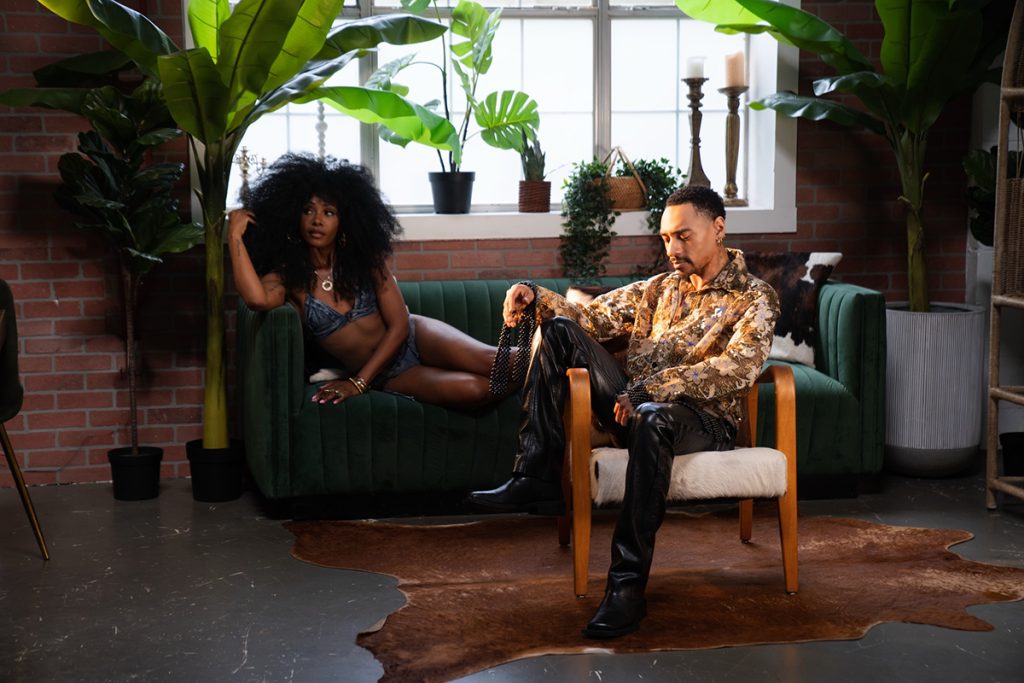
For Richard, the album is also a chance to challenge narrow definitions of New Orleans music. “We can be progressive, R&B, electronic dance, all these things,” she says. The city’s history is one of cultural exchange, shaped by Indigenous, African, Caribbean, and European influences, and her album reflects that complexity. Contributions from Big Freedia, Tarriona “Tank” Ball, Jelly Joseph, and Durand Bernarr reflect the breadth of Black musical expression. At the same time, a reinterpretation of Chocolate Milk’s “groove city” creates a musical conversation between generations. Perhaps the album’s most significant contribution is its incorporation of Kouri-Vini, a Louisiana Creole language whose future remains uncertain. “Putting Kouri-Vini on wax is so powerful because this is an archived piece now,” she tells me. “There are very few albums that have spoken or sung Kouri-Vini on wax.” When I ask whether she consciously approached the project as an archive of her cultural history, she responds immediately. “Yes, absolutely. Because this time around, it was important to pay it forward.” She explains that legacy has become increasingly central to her creative decisions. “I think a lot of the last few years of my career, I have been very intentional about legacy and what I wanted to leave behind.”
Backstage before her New York show, I found a different kind of energy than the one I was about to witness onstage. The room felt peaceful, filled with close friends, laughter, and prayer. No sense of chaos or urgency, just people who clearly loved one another, gathered around a woman they had come to support. I asked Dawn’s best friend what she loved most about her, and her answer was simple: “Dawn loves on other people.” It stayed with me because, for all the conversations about her extraordinary creativity, something equally revealing was seeing the world she has built around herself.
And who she is is someone surrounded by love. For an artist whose career has required so much independence and determination, the community around her offers a beautiful contrast. The woman who has spent years challenging expectations and carving out her own space in music is also deeply connected to the people who know her beyond it. When I ask what she wants audiences to take away from her performance, she laughs. “I want them to sweat. I want them to come away saying I should have not straightened my hair today.” Her shows are built around movement, with nearly an hour and a half of choreography, familiar songs, and newer material that asks audiences to participate rather than observe. “I want people to feel free, to feel like, damn, that was a show,” she says. With Creole Culture, Richard is creating a record of the histories, people, and traditions that shaped her while making room for a different understanding of what New Orleans can sound like. After spending time with her, I came away thinking that her legacy extends beyond the music. It lives equally in the relationships she nurtures, the community she carries with her, and the love she gives so freely.
Creole Culture is available now via Merge Records.