
文化
メリッサ・バレラ
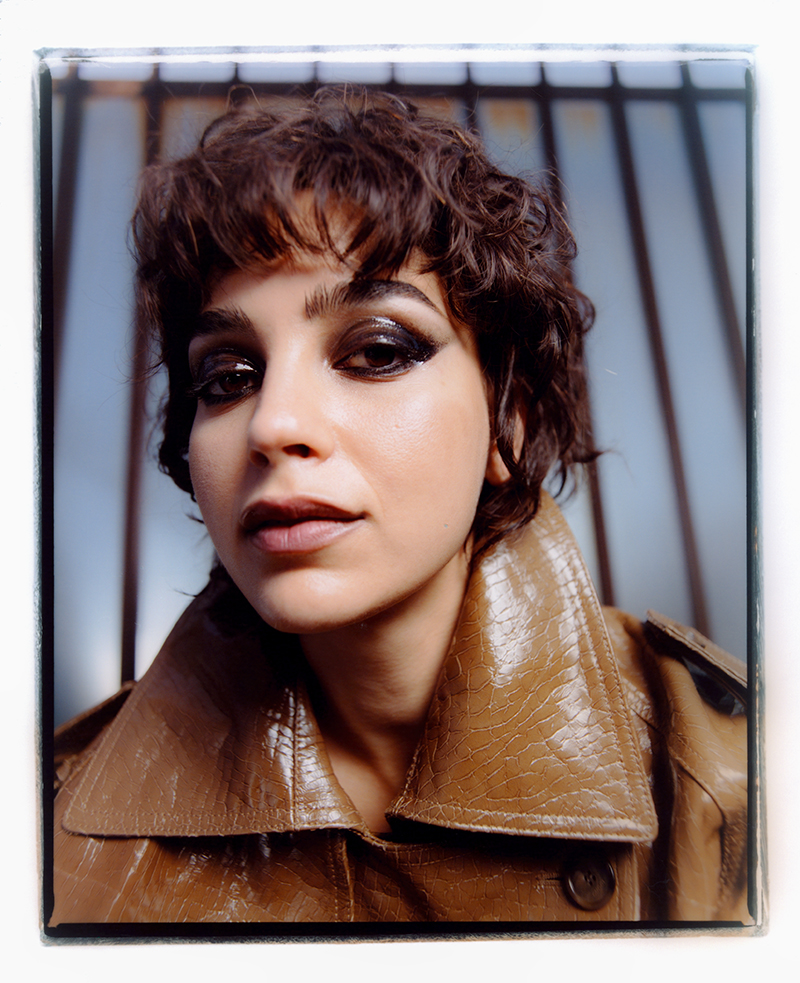
|
Full look: グッチ |
Melissa Barrera Is the Scream Queen We’ve Been Waiting For
の言葉 ケレーン・マーセラス
What do a horror film and a musical have in common? 最近, メキシコの女優メリッサ・バレラ. The thespian traverses between the two genres with ease, as they both include the intricacies and nuances of a bold, complex woman. Barrera humbly doesn’t identify as a Scream Queen, citing The Shining’s Shelley Duvall as a rightful heir to the title. しかし, she’s recently played several horror roles, から Scream に Your Monster, garnering a loyal fan base. Her breakout role as Vanessa Morales in the film adaptation of the stage musical In the Heights was the catalyst for it all. She went on to star in カルメン, another musical, and then the slew of horror films came next.
While she’s an actress who clearly delivers an outstanding performance, not being white has posed as an obstacle at times in her career. But that doesn’t stop her from creating her own opportunities. 時々, the table we’ve been waiting to be invited to just needs to be built ourselves. Namely, Barrera has written a script for a genre she’s always wanted to see herself in. Nothing is out of reach for the actress. She was an executive producer of an award-winning documentary, Traces of Home, by Mexican-Palestinian filmmaker Collette Ghunim. It’s a story that hits close to home in culture and experience for Barrera. After Scream 7 fired her in response to her pro-Palestinian comments on social media, this film felt like a kismet opportunity. “I know that art has the potential to spark meaningful, positive change,” she reflected. This sentiment is the foundation of her career.
Barrera is boundless in ideas and energy; nothing can slow her down. While she is an actress, she’s also a multi-hyphenate in the making—a true artist. It’s clear she’s not afraid to speak up, a trait in Hollywood that isn’t always rewarded, but necessary even when standing alone. We discussed her dream roles, method acting, and art that heals.
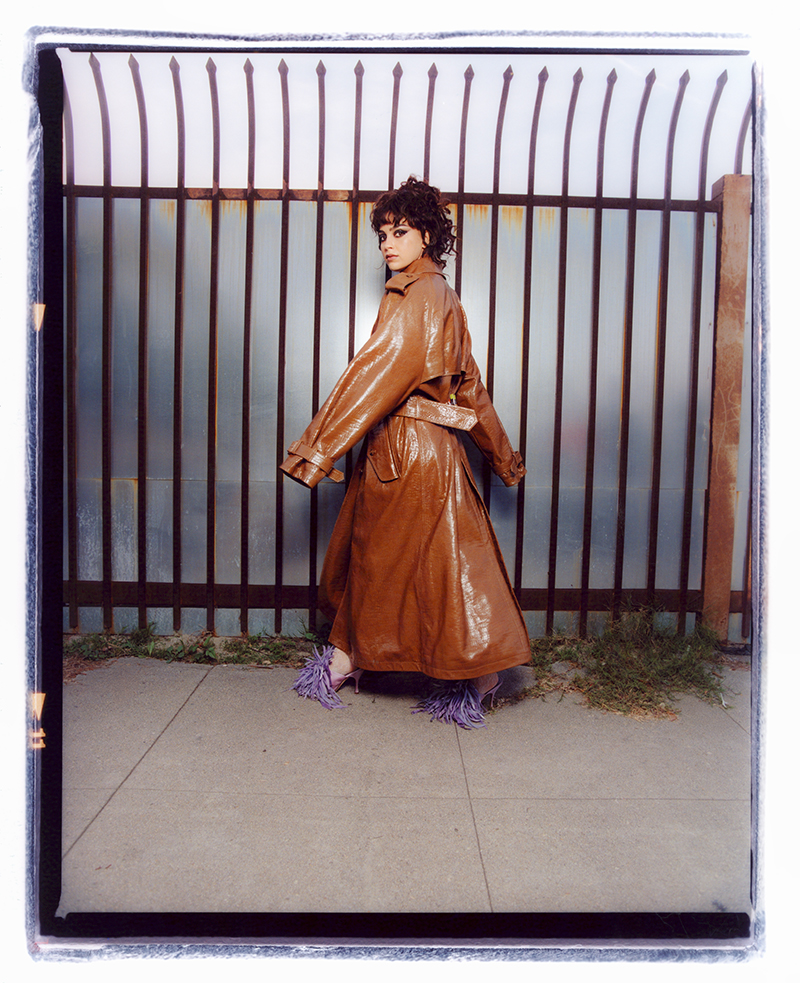
|
Full look: グッチ |
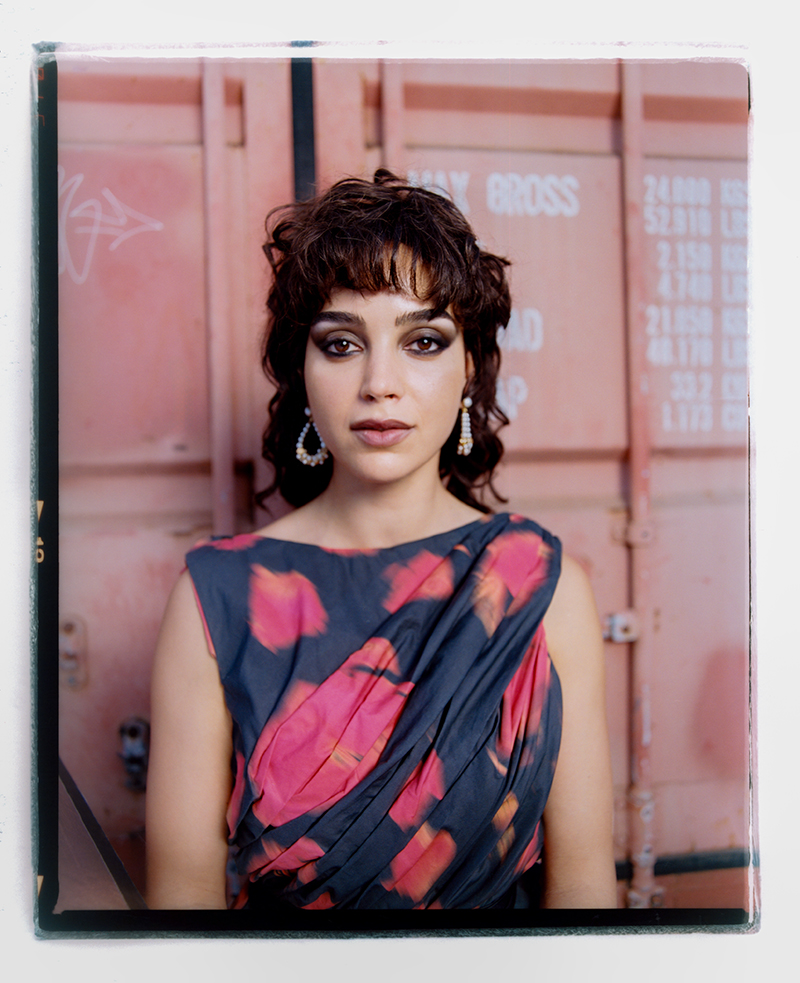
|
ドレス: Palomo Spain, イヤリング: シャネル |
I know your early career was in Mexico. How did you get into acting?
My career started in Mexican soaps and on a reality show, but I started acting in school. The school I attended in Monterrey had a really great drama and theatrical program. I started my early years as an athlete playing basketball, and I always looked at the kids on stage and wanted to be up there with them. 最終的に, I convinced my entire basketball team to go with me to the Wizard of Oz audition in eighth grade, and that was it; I fell in love. I felt a sense of belonging with theater kids. I decided that’s what I wanted to do for a career and went to Tisch at NYU. Then two years into college, I auditioned for a singing competition show in Mexico, and after that, I started working in telenovelas. That was 2011, almost 15 years ago now.
Your big breaks were in musicals In The Heights そして カルメン, but I feel like you’ve been in a lot of horror movies and thriller shows lately. Would you say that’s your favorite genre to work in, and why?
I wouldn’t say I have a favorite genre, but in the last few years, the best scripts I’ve gotten have been in horror or horror-adjective projects. Musicals are my first love, けれど, and I’ve always said if I had to choose only one genre to work in for the rest of my life, it would be movie musicals. But I like variety, and I think every genre uses different muscles, and it’s important to use them; otherwise, they’ll atrophy. If you stick to one genre for too long, you’ll forget how to do the rest. I think comedy is probably the hardest in technique. I grew up mostly watching either big fantasy action movies or rom-coms, so I would love to do more of that. I haven’t done a straight rom-com yet, so that’s where I’m leaning towards next.
What are the parallels between horror and musicals to you?
I’m going to paraphrase this from Caroline Lindy, the director of Your Monster, because she said this beautifully— horror and musicals are actually very similar. After all, they’ve always allowed loud, messy, imperfectly bold women to be at the center. They’re both very heightened, あまりにも. Horror, もちろん, has the final girl, the woman at the end who’s the survivor and a hero. Musicals have so many roles with iconic women leads that are allowed to be complex and flawed characters who go through immense growth. These are the genres I’ve worked in the most, and I think it’s because I’ve always gravitated towards journeys of complex female characters who are strong.
You’ve been deemed a Scream Queen because of your horror film roles. What is the definition of a Scream Queen to you?
It's an honor even to be considered on that list, because to me, being a “Scream Queen” requires a lot of career experience and a portfolio of iconic roles. “Scream Queen” is a term that’s overused nowadays—I grew up watching and admiring the hailed “Scream Queens.” I think Shelley Duvall in The Shining and Isabelle Adjani in Possession are my top two. The definition, 私に, is someone who has an iconic cult classic film that everyone recognizes, or a jaw-dropping performance in horror.
What other types of roles are on your list of dream roles?
I’ve always loved Indiana Jones and have searched for a version of that with a woman leading. I would love to do a big action or adventure epic. さらに, anything romance—I’m a sucker for romance, that’s what I latch onto in any film that I watch or a script that I read. Romance is the thing that connects me to the story, no matter if it’s a side plot in a horror or an action movie. I’ve written a script myself that is a period romance, because I’ve always wanted to be in a story like that. Being that I’m Mexican, I’m not often considered for those kinds of roles, so I have to make my own opportunities. There’s a lot I still want to do and new roles I want to explore without closing myself off or being in one lane. I’ve learned to be open to whatever opportunities may come.
What type of acting methods are you a fan of, and what’s the one you tend to use the most to step into the life and feelings of a character you're playing?
Sometimes I read a script where I connect so deeply with the character that I only focus on the lines written. 他の時に, the role requires more research, talking to people, and creating mood boards or playlists to build out the character’s world. I’m not a particular fan of what people call method acting, which I think has become a kind of muddled term. In the modern sense, it’s unnecessary in my opinion. I think originally, method acting didn’t mean to absorb the character into your own everyday life, but rather to pull from your own experiences and sense memory to get into the character and access authentic emotions. To each their own, 私は言います, as long as you’re not creating discomfort on set or making things more difficult. I personally go on a case-by-case basis, depending on the project, I don’t have one technique I use all the time.
Who are the actors, filmmakers, or directors you look to the most for inspiration?
I feel very inspired by auteur filmmakers who are acting in their own films, which I’ve always wanted to do myself. 例えば, Sarah Polley, Xavier Dolan, Cooper Raiff, recently Eva Victor, who just wrote, directed, and starred in her film Sorry, 赤ちゃん this year. I love seeing people do it all and do it well.
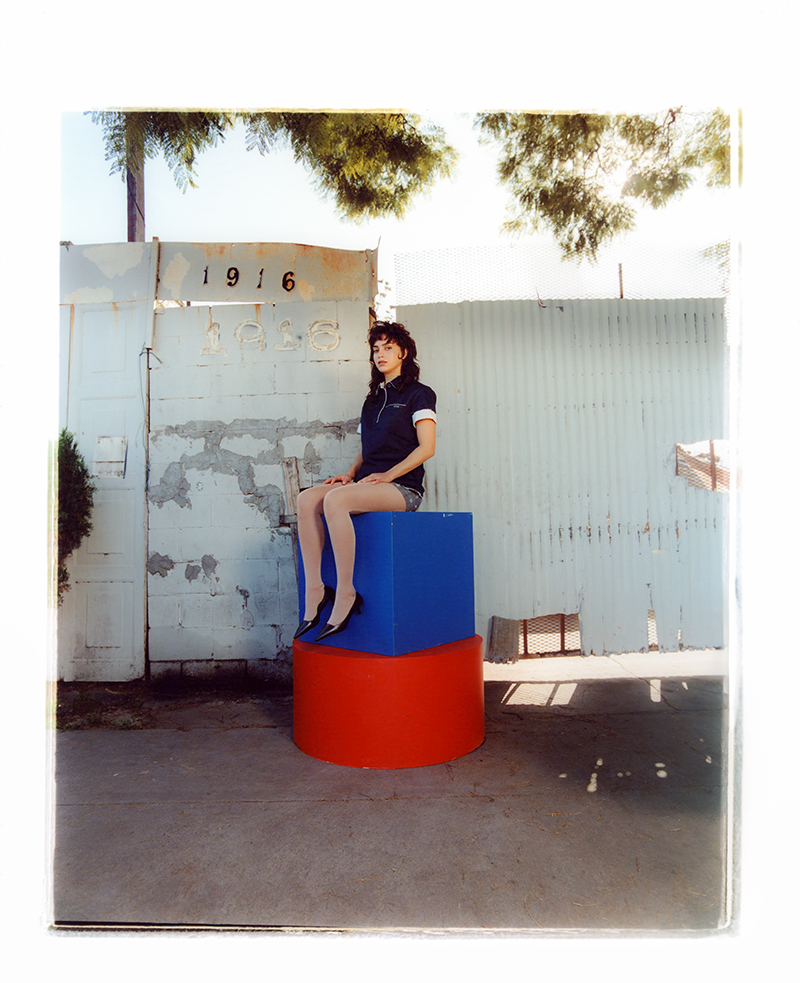
|
Full look: プラダ |
You co-executive-produced Traces of Home, based on Palestinian-Mexican filmmaker Collette Ghunim. What was that process like in getting to be an exec producer, seeing a story so close to your culture, and the aftermath of winning the DOC NYC prize?
I’m so proud of Traces of Home; it’s such a beautiful, important, and timely documentary. I was approached by the team to join as an executive producer late in the process, so I can’t take any credit whatsoever. I’m thrilled to be supporting its release so we get as many eyes on it as possible. I know that the director, Colette [Ghunim], had been working on this since 2018, which really shows how long the situation in Palestine has been dire. I feel connected to it because I’m Mexican and because of my connection to Palestine, but also because it’s such a beautiful, specific, intimate lens into intergenerational trauma.
The story focuses on one Mexican-Palestinian family trying to heal deep wounds caused by both parents having to flee their homes due to different forms of violence. I know that Colette, the director and star, plans to launch an impact campaign to get the film in front of as many eyes and ears as possible, at colleges and places that would benefit from this kind of conversation. The current state of the world is creating new refugees every day, and those people then pass on that trauma for generations if not properly healed (when that’s possible). It’s an important conversation to have—to realize the ripple effects this kind of trauma will have on generations to come. This film is about healing and finding closure, which is such an important tool for people around the world trying to do the same. I’m very proud and honored to be a part of the Traces of Home team.
What’s a major acting goal that you want to accomplish in the new year?
My goal is always to work on projects that excite me and challenge me to keep growing. I have an important goal behind the camera, which is getting my film made. Hopefully, along the way, I’ll collaborate with like-minded, like-hearted artists who are interested in telling stories with purpose that can heal people one heart at a time. I know that art has the potential to spark meaningful, positive change.
What are some new projects (that you’re allowed to talk about) that fans can get ready for?
My newest project is The Copenhagen Test, premiering on Peacock! The show is a twist on the spy genre, and as a longtime fan of the genre, I find it to be such a fresh take. It’s intriguing, suspenseful, and unexpected, so in that vein, I don’t want to reveal too much, but I can say I’m so proud to be a part of it and working with Simu Liu and the rest of the cast.
|
写真: Thalia Gochez ファッション編集者: オリバー・ヴォーン 髪: Clayton Hawkins at A Frame Agency 補う: Jen Tieseco at A Frame Agency セットデザイン: Ruth Kim Styling Assistants: Sid Sultan and Jonny Fittin Set Design Assistant: Kyle Figueroa Special Thanks, Dream Factory LA |