

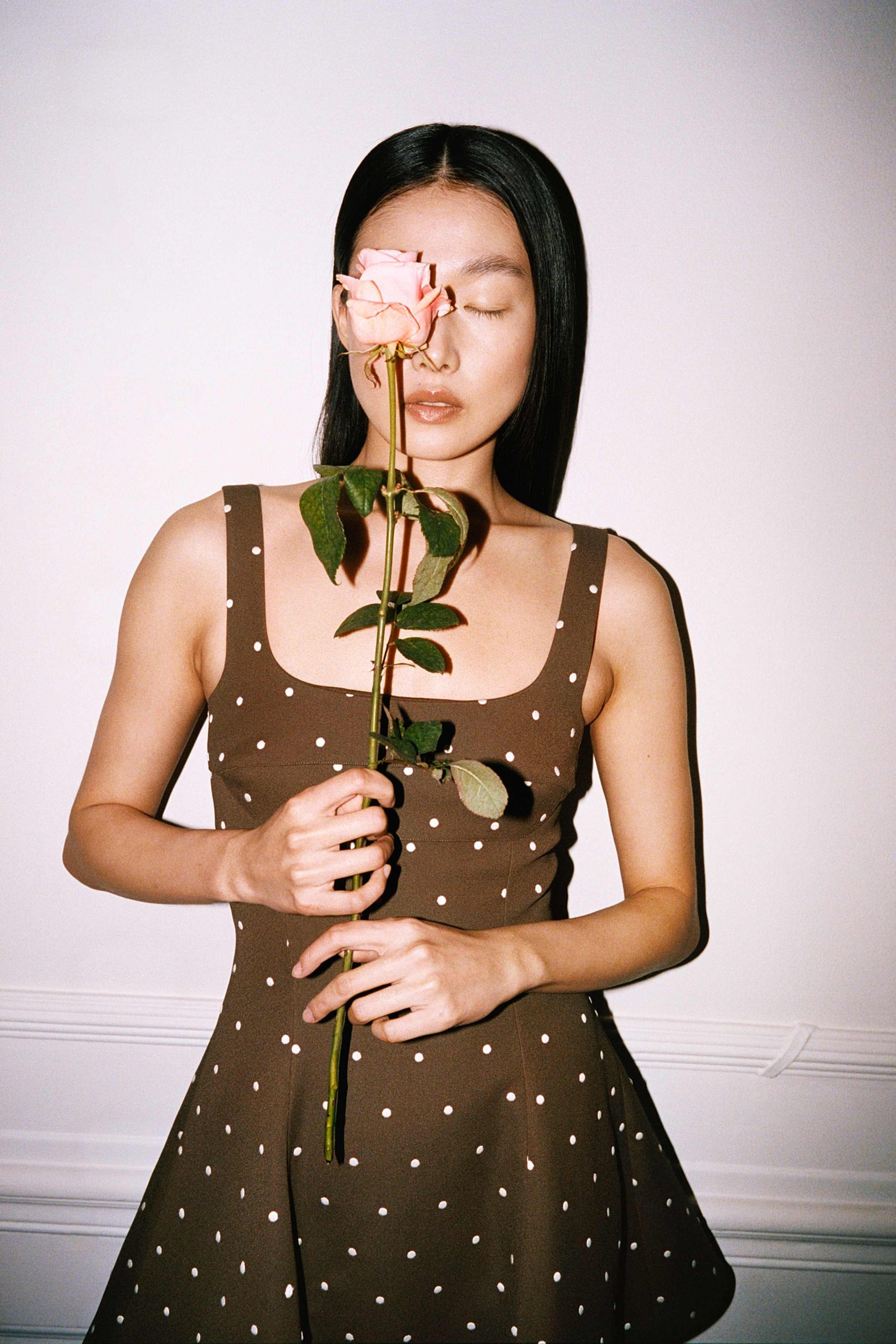
Photography courtesy of Stine Goya
Words by Teneshia Carr
In her latest collection, the Danish designer explores personality, color, and the quiet confidence that comes from dressing for yourself.
Fashion often asks us to commit to a single identity. The minimalist or the maximalist. The romantic or the creative pragmatist. Entire wardrobes are built around these neatly packaged archetypes, encouraging consistency over contradiction. Stine Goya has never been interested in that kind of certainty. Her latest collection begins with a simple but surprisingly revealing question: who are you today? Not who you were yesterday or who you hope to become, but the version of yourself you wake up feeling in this particular moment.
“I kept coming back to the idea of how empowering it feels to dress for yourself and express who you are,” Goya tells Blanc. “It’s about showing up authentically and recognizing that same individuality in the people around you.”That philosophy became more than inspiration; it became the framework for the collection itself. Rather than designing around a singular muse, Goya turned inward, beginning with the people who surround her every day.
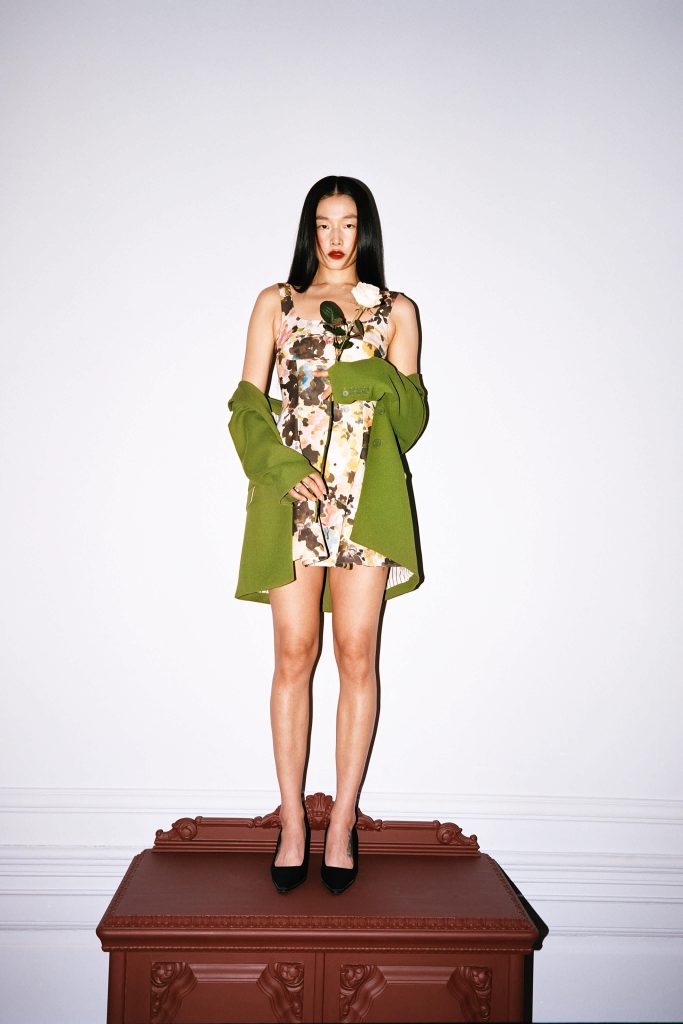
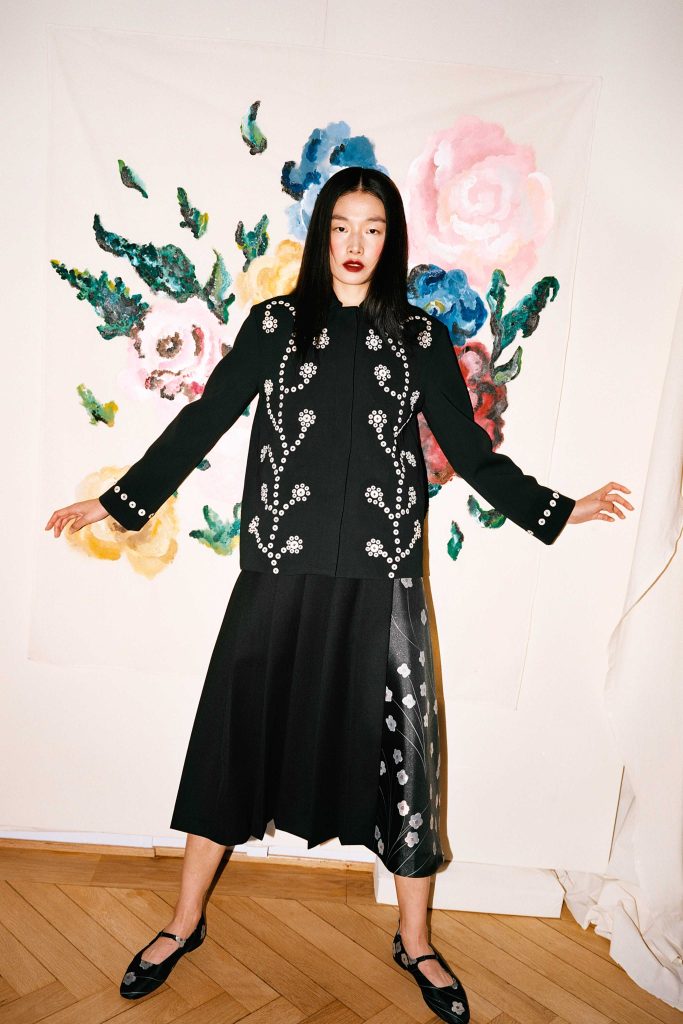
“I see that every day within my own team. Everyone has such a distinct personality and way of expressing themselves, and that became the starting point for the collection.”
The studio even took personality tests, using the results to develop three distinct wardrobes. Each reflects a different way of dressing, but none is intended to be permanent. “What I love is that they’re not fixed characters,” she explains. “You can be any of them depending on your mood, the occasion, or even the time of day. That’s how I think we all dress. Fashion should let you explore different sides of yourself.” It feels particularly relevant now. Fashion has spent the past several years swinging between extremes. One season celebrates restraint and anonymity; the next embraces excess, theatricality, and unapologetic self-expression. Goya quietly rejects the binary altogether. Her answer is more nuanced: we contain all of these impulses, and our wardrobes should be expansive enough to accommodate them. That same sense of flexibility extends to one of the designer’s enduring signatures: color.
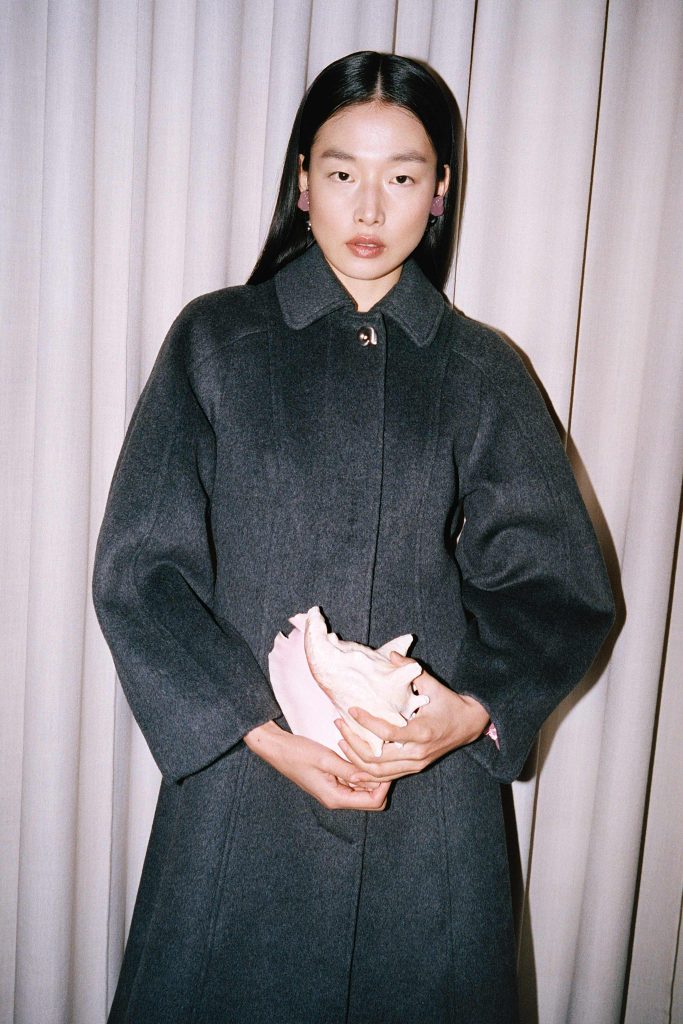
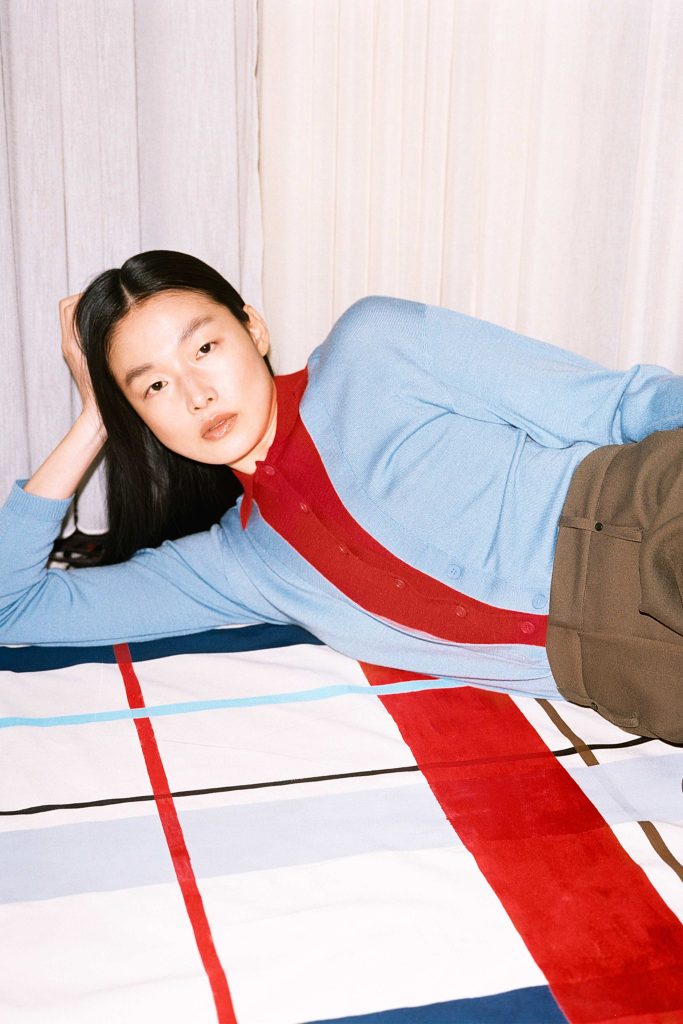
Long before saturated dressing became a trend, Goya built her brand around expressive palettes and painterly prints. Yet she is careful not to describe color as a performance. Instead, she speaks about it as something deeply personal. “Each of the three personalities has its own color palette, prints, and mood,” she says. “Working on this collection reminded me that my own relationship with color is constantly evolving.”
“Some days I’m drawn to vibrant colors and expressive prints; other days I feel just as confident in a long, solid grey coat. Both feel true to me.” It’s a subtle but important distinction. Color isn’t valuable because it’s loud. It’s valuable because it communicates something words often cannot. “I hope people discover how much joy and confidence colour can bring,” she says, “and that they feel encouraged to be a little more playful with the way they dress.” That optimism has become one of the defining qualities of the Stine Goya universe. Even as trends accelerate and aesthetics cycle through social media at impossible speed, her collections rarely feel reactive. They remain rooted in curiosity rather than commerce.
“I’ve always tried to stay true to what genuinely inspires me rather than follow what’s expected,” she says. “Fashion moves incredibly fast, and there are always new trends and new directions, but I’ve learned that the strongest collections come from creating something that really moves me, whether that’s an art exhibition, a film, a piece of music, or a conversation.” As a result, the Stine Goya woman hasn’t changed nearly as much as the industry surrounding her. “To me, she’s always been someone who’s true to herself: curious, creative, and unafraid to express her individuality. She dresses for herself, not for trends, and I think that’s even more relevant today.” Throughout the collection, those ideas reveal themselves in thoughtful details rather than dramatic gestures. One of the season’s most memorable motifs began as an illustration before quietly transforming into something much larger.
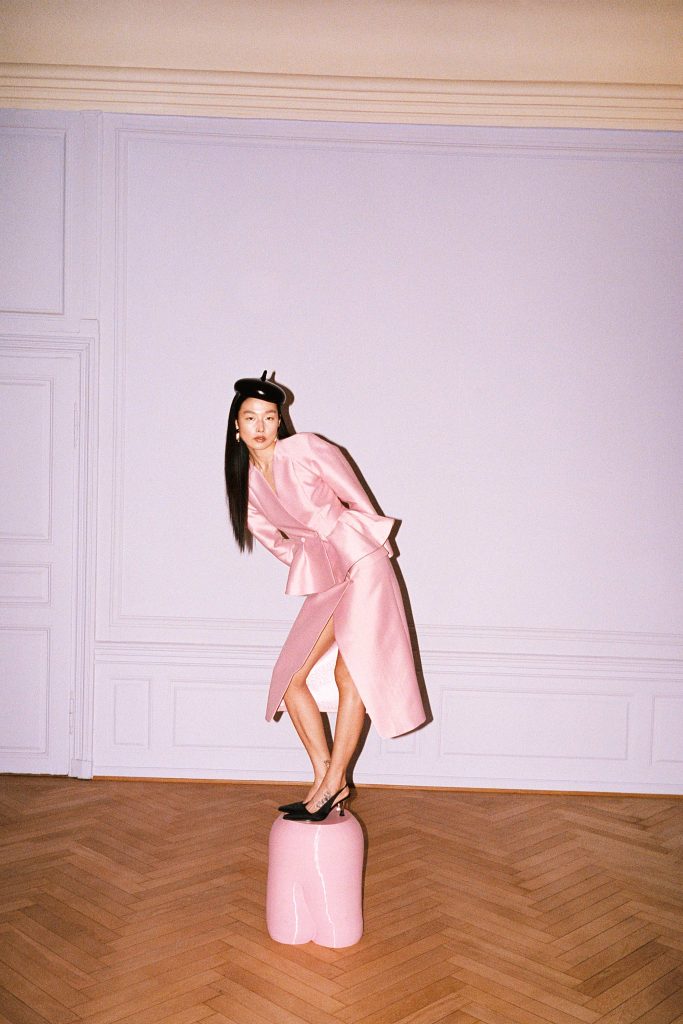
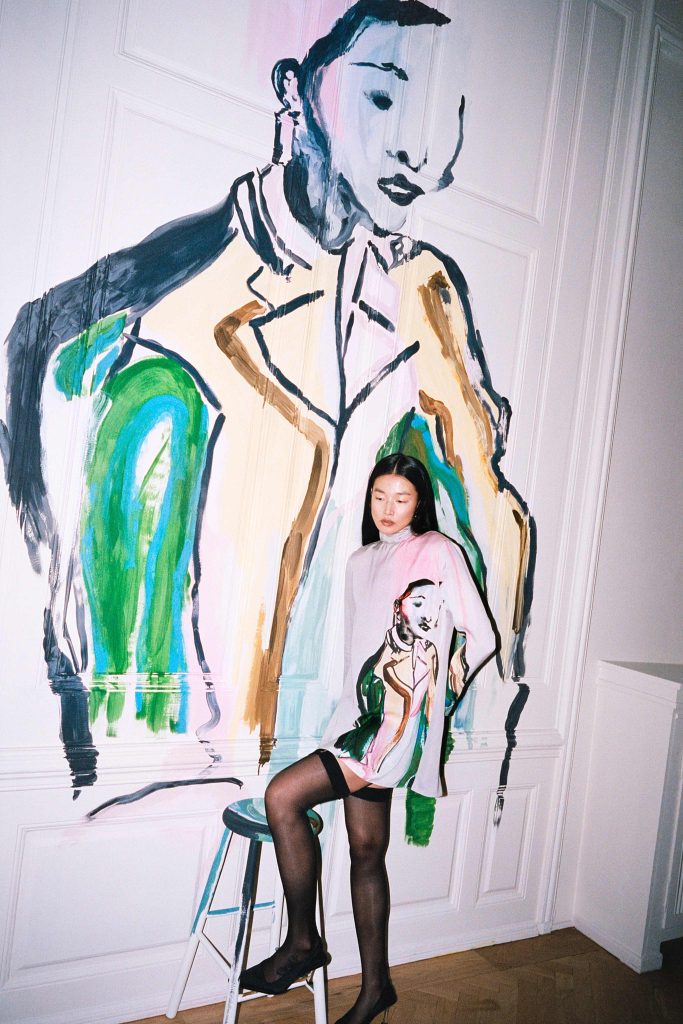
“We developed a shell motif that evolved in unexpected ways throughout the collection,” Goya explains. “It started as a print, then became the inspiration for a custom button on shirts and outerwear, and later transformed into crystal embellishments on dresses and jackets.” She also returned to another artistic language that has appeared throughout her career: portraiture. “One element I especially loved was creating the portrait of a woman who embodies the three personalities. It’s been a while since we’ve featured a painted portrait in a collection, so it felt exciting to revisit that artistic expression.” These moments reveal something essential about the way Goya designs. Rather than treating prints, embellishments, or textiles as decorative flourishes, she allows ideas to evolve organically, giving a single visual language multiple expressions across the collection.
“I always enjoy when an idea grows beyond its original purpose,” she says. “That’s one of the most rewarding parts of the creative process, seeing a single shape or technique take on different lives throughout a collection.” Perhaps that’s why her collections resist feeling tied to a particular season. While fashion increasingly rewards immediacy, Goya continues to design with longevity in mind.
“I don’t really design for a specific moment in time,” she says. “I always hope the collections have a lasting quality because they’re rooted in ideas and emotions rather than trends.” “If someone discovers this collection years from now, I hope they can still connect with it and make it their own. That’s what makes clothing meaningful to me. It continues to live with the person wearing it, evolving with them over time.” That sentiment may ultimately be the collection’s greatest achievement. It isn’t asking us to become someone else. It simply offers the freedom to be many things at once. In an era increasingly obsessed with defining personal style through algorithms and aesthetics, Stine Goya offers a gentler proposition: identity isn’t fixed, and neither is the way we dress. The most enduring wardrobes leave room for contradiction, curiosity, and change. This collection celebrates all three.