
Beauty With Receipts
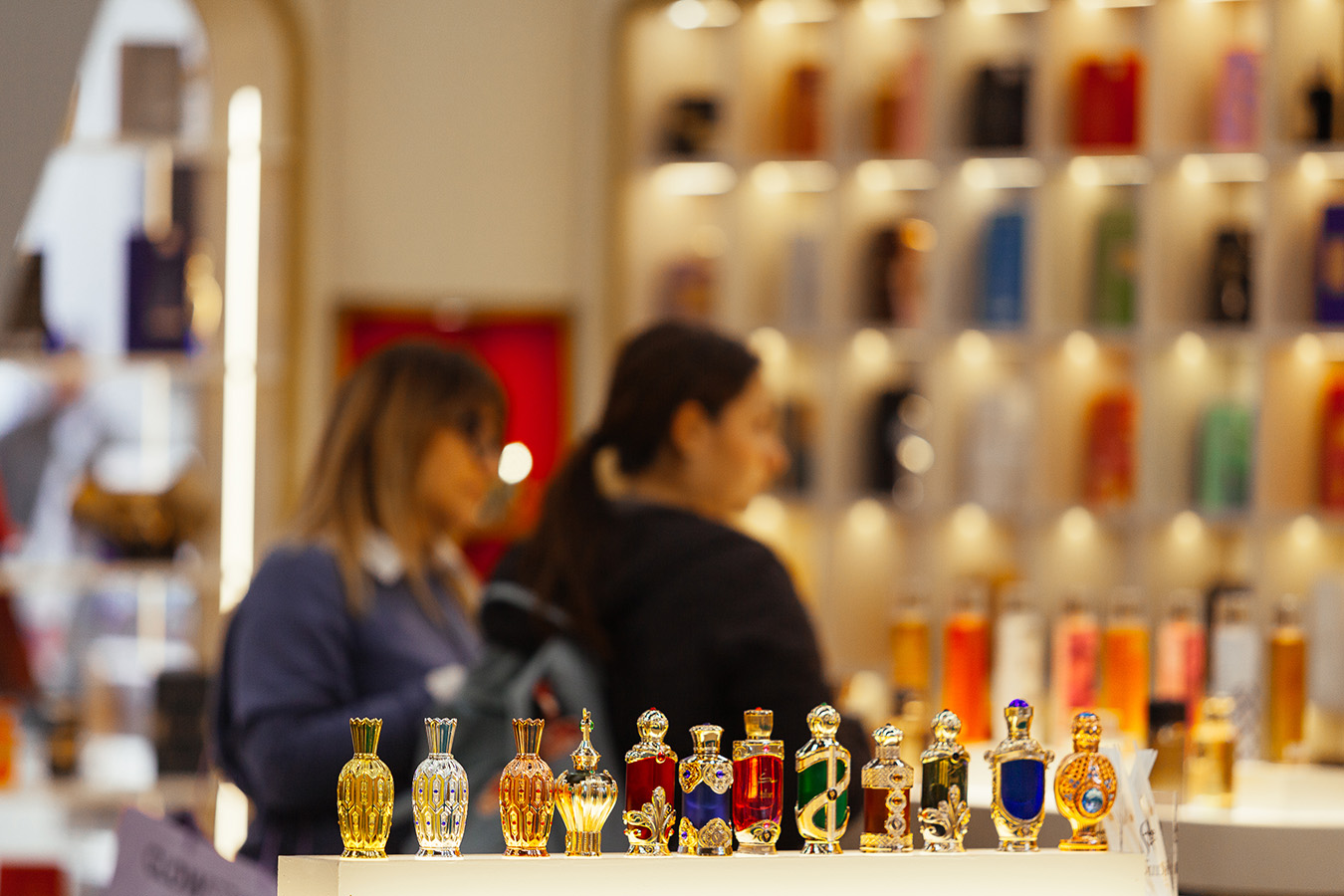
Inside Cosmoprof Worldwide Bologna
words by Sienna Clarke
Every spring, Cosmoprof Worldwide Bologna transforms the city into a living atlas of innovation, where the future of beauty is not forecasted but forged in real time: in bustling aisles, over quick espressos, and in spontaneous meetings that begin as casual greetings and end with new deals.
Recent editions have cemented Cosmoprof’s status as the industry’s global crossroads. Last March, more than 255,000 attendees from 150 countries converged on the fair, alongside 3,128 exhibitors representing over 10,000 brands, a testament to the fair’s magnetic pull for everyone from legacy giants to bold newcomers.
Yet behind the impressive numbers, Cosmoprof’s true story is always about what the world wants next and who will deliver it. This year, the buzz centered on three themes: ingredient integrity, clinical credibility, and cultural specificity. Brands and buyers agreed on one thing: consumers are done with “exotic” for its own sake. They want results they can trust, sourcing they can trace, and brands that feel authentic, not artificial.
A fair built like a Beauty ecosystem
Cosmoprof Bologna’s influence comes from its design: not a single show, but a tightly woven ecosystem. Finished products, professional hair and nails, and the supply chain all move side by side, letting ideas leap from concept to component to shelf strategy in just hours. This closeness is why Bologna still matters in a digital age—you can sense what’s next, not just read about it.
More and more, the future is being shaped by markets once labeled “emerging” that are now stepping confidently into leadership.
The Africa conversation: from trend to infrastructure
One of the strongest signals on the ground was the rising focus on Africa not as a fleeting trend, but as a powerhouse of supply, innovation, and consumer demand with its own unique momentum.
During the CosmoTalks programming, a panel titled “Africa’s Natural Wealth: Celebrating Its Indigenous Ingredients” centered on the continent’s ingredient heritage and the business realities of building ethical, scalable brands rooted in place. The session spotlighted powerhouse ingredients like shea, baobab, moringa, and marula, while also naming the core tension founders know too well: how to commercialize indigenous resources without extracting value from the communities that have safeguarded them for generations. The panel’s lineup offered a vivid glimpse of African beauty’s direction: premium, ingredient-driven, globally savvy—yet always true to its roots.
Arami Essentials (Oreoluwatomi “Ore” Lawani)
Nigeria’s Arami has become synonymous with modern African body care: minimalist, design-forward, and steeped in ritual. The brand’s story starts with a bold idea: Africa, rich in powerful ingredients and wellness wisdom, belongs at the heart of the global beauty conversation.
Nigeria’s Arami has become synonymous with modern African body care: minimalist, design-forward, and steeped in ritual. The brand’s story starts with a bold idea: Africa, rich in powerful ingredients and wellness wisdom, belongs at the heart of the global beauty conversation.
R&R Skincare (Valerie Obaze)
Founded in Ghana, R&R centers shea—transforming a heritage ingredient into a modern skincare staple while championing ownership and authenticity at every step. In a world full of “shea stories,” R&R stands out for its focus: this is not just about sourcing, but about building a brand rooted in African production, where origin is the value, not an afterthought.
Founded in Ghana, R&R centers shea—transforming a heritage ingredient into a modern skincare staple while championing ownership and authenticity at every step. In a world full of “shea stories,” R&R stands out for its focus: this is not just about sourcing, but about building a brand rooted in African production, where origin is the value, not an afterthought.
Chéribé Beauty (Salwa Petersen)
Chéribé (formerly known under Salwa Petersen Haircare) brings the conversation to hair—specifically, to chébé, a tradition associated with Chadian women and long-standing practices of length retention and hair strength. The brand’s framing is powerful because it treats tradition as technology: not nostalgia, but a system worthy of investment, clinical study, and modern product design.
Chéribé (formerly known under Salwa Petersen Haircare) brings the conversation to hair—specifically, to chébé, a tradition associated with Chadian women and long-standing practices of length retention and hair strength. The brand’s framing is powerful because it treats tradition as technology: not nostalgia, but a system worthy of investment, clinical study, and modern product design.
CEO of O'Bao (Suzie Wokabi)
A pioneer in Kenya’s beauty landscape, Suzie Wokabi’s work bridges color and care, retail and education—proof that “ecosystem building” isn’t just for multinationals. Her brands speak to what buyers are increasingly seeking: founders who understand product and market-making, from community trust to distribution realities.
A pioneer in Kenya’s beauty landscape, Suzie Wokabi’s work bridges color and care, retail and education—proof that “ecosystem building” isn’t just for multinationals. Her brands speak to what buyers are increasingly seeking: founders who understand product and market-making, from community trust to distribution realities.
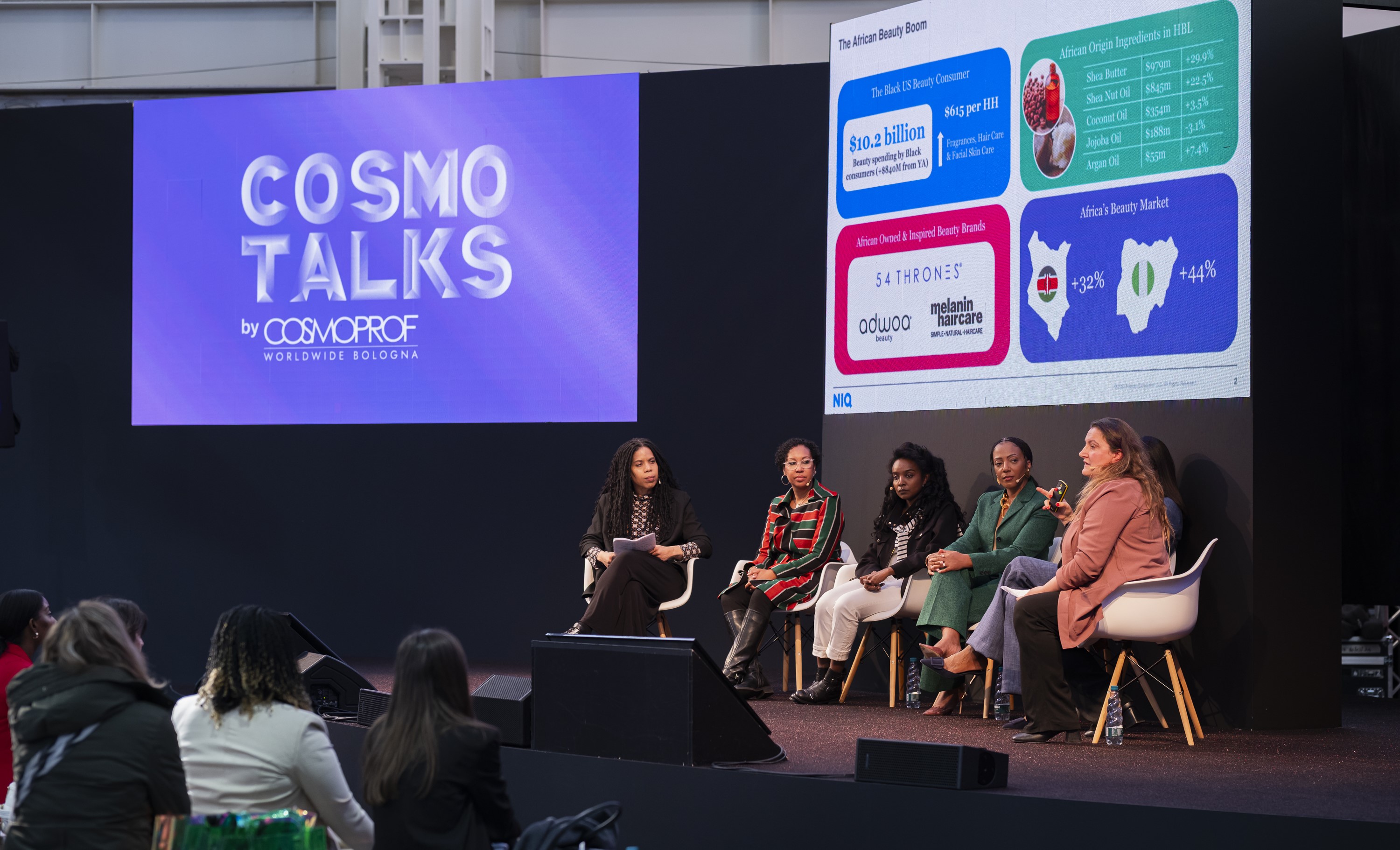
Together, these brands signal a larger shift: African beauty is not waiting for discovery; it is building its own infrastructure, setting standards, and demanding fair terms. Cosmoprof Worldwide Bologna will always be about scale. And perhaps that is the quiet but undeniable truth Cosmoprof Bologna now makes impossible to ignore: the future of beauty will be written by those who understand that origin is not a marketing hook, but a responsibility. As buyers, formulators, and founders move faster toward transparency, equity, and performance, the brands that endure will be the ones able to perfect the science, story, and soul. African beauty brands are not asking for space at the table; they are redesigning the table entirely, bringing with them systems of care, knowledge economies, and ingredient intelligence that predate the modern beauty industry itself. In Bologna, that shift felt less like a trend cycle and more like a structural change, one where beauty’s next chapter is being shaped not by who discovers value, but by who has always known where it lives, and is finally positioned to lead it forward on their own terms.
In that future, Africa is not a footnote. It is the foundation.