
SUDAN ARCHIVES
The Violin as Weapon, Mirror, and Spell
words by Teneshia Carr
photos by Yanran Xiong
When you speak with Sudan Archives — the artist born Brittney Parks — there’s a sense of both calm and charge, as if she’s quietly inventing the next note before she says it. She’s calling from her loft in Los Angeles, sunlight pouring over stacks of instruments and cables, the traces of the organized chaos that feeds her sound. “I learned to play violin by ear in church,” she says, matter-of-factly. “That’s where I developed my style, in church.” Her father was a minister in Cincinnati, and the music of her youth was the sound of worship: rhythmic, improvised, alive. “I didn’t have classical training,” she explains. “It was church training. Then there was this fiddle club after school, so my whole foundation was really expressive playing, not technical.”
That instinct, to play first, to feel before she knows, has become her signature. As Sudan Archives, Parks has carved out a new language for the violin, blending it with R&B, electronic textures, and field recording experimentation. Her music is an exploration of dualities: chaos and harmony, sacred and sensual, ancient and futuristic. “I think it started when I began buying gear,” she laughs, describing her early experiments. “A loop station, a computer, I just started building layers. I’d add one violin line, then another, then beats, and suddenly it became this world.” That “gadget girl” period defined her early releases, including her debut EP Sudan Archives (2017) and its follow-up, Sink (2018), both on Stones Throw Records. She wasn’t merely layering loops; she was building architectural sound as a form of construction.
Her 2019 album, Athena, introduced her to a global audience, positioning her as an avant-garde R&B innovator. But it was 2022’s Natural Brown Prom Queen that made her unignorable. The album, which was sprawling, confident, playful, and raw, tackled identity, hair, sensuality, and self-worth with unflinching honesty. Critics hailed it as one of the year’s best. Still, Parks sees it as just another chapter in an ongoing process of self-definition. “I feel like I was more introspective before,” she says. “Now I’m more… outrospective. There’s more personality in the songs now, and maybe a little more provocative. I’m just not holding back.”
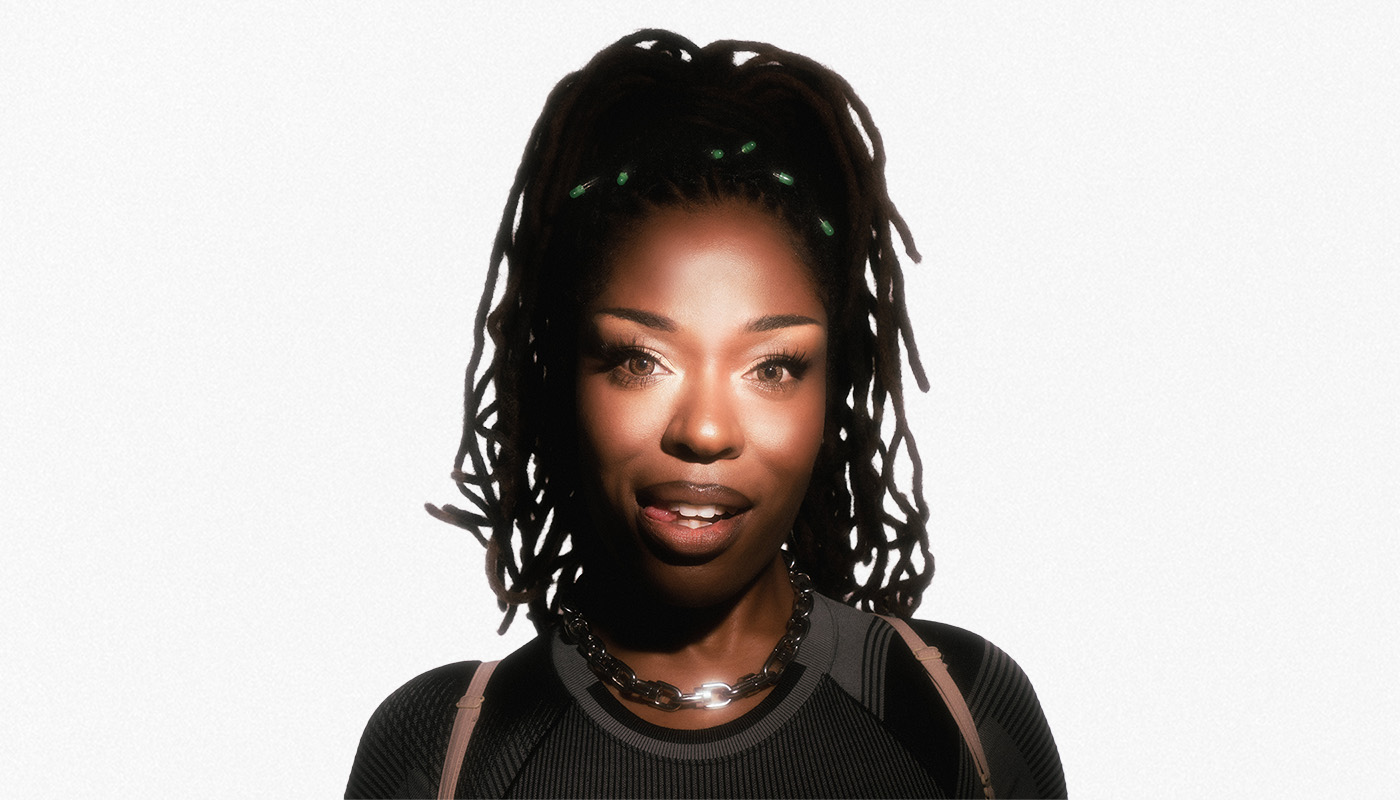
In our conversation, hair comes up like a heartbeat, not as vanity, but as a site of power, trauma, and visibility. “My song ‘Selfish Soul’ is about hair, 4C textured hair,” she says softly. “It’s about my hair. Growing up, we were taught to get perms, and later I realized they were poison. I went through all these phases, the fro, the weave, shaving it all off. It was so traumatic. I wish I had never permed it, so I could’ve kept all that healthy hair.” There’s no bitterness in her voice, just a fierce clarity. “I want girls to look at me and want to wear their hair natural,” she adds. “When I found my look, braids, beads, my hair like a crown, it just felt right. It’s about representing myself as I am.”
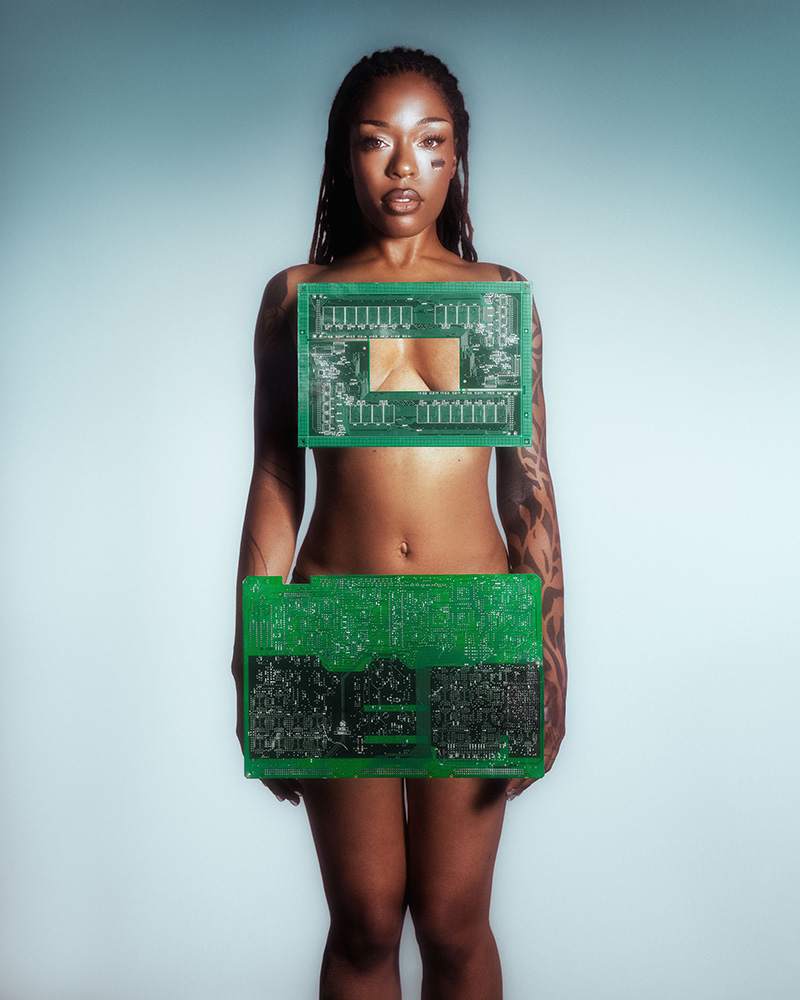
That representation carries through her visual storytelling. Her videos, rich in surreal imagery and symbolism, mirror the balance between experimentation and intimacy in her music. “When I make songs, I already have a video in my head,” she says. “I usually write a treatment myself and then bring it to a director to execute. The visuals are part of the composition.” Her sound thrives on contrast, delicacy framed by distortion, softness colliding with rhythm. “Sometimes it sounds chaotic,” she laughs, “but then it ends up feeling nice and balanced.”
That balance often comes from collaboration. “I can be all chaos,” she admits, “so I like working with people who can add structure. It makes the sound feel complete.” Still, she’s protective of solitude. “You have to have creative solo days,” she says. “Get all your own ideas out first so when you collaborate, it comes from freedom, not compromise.” It’s that push and pull of independence and collaboration, intuition and precision that gives her music its tension. It’s also what makes her live performances magnetic: her violin loops spiraling outward, her voice a mix of command and release. “I practice my instrument constantly,” she says. “So when the improvisation happens, it just comes out naturally. If you practice enough, the chaos still sounds good.”
When asked what innovation means to her now, Parks pauses. “It means breaking boundaries,” she says. “I want to invent my own violin. I think you have to make things sound bad sometimes, test the limits, to really innovate. You can’t be afraid to sound wrong, that’s how you figure out new rules.” It’s a philosophy that echoes the pioneers before her, artists like Björk, Laurie Anderson, and Missy Elliott, who blurred genre through fearless experimentation. But Parks is carving her own lineage, one rooted in the Black sonic tradition of re-invention. When I ask what she wants people to feel when they listen to her new album, her answer is simple: “Empowered. I want them to dance. I want them to wash away the stress.”
She laughs when we talk about aging. “When I was in my twenties, I cared so much about what people thought,” she says. “Now I just don’t care. Maybe that’s what your thirties are about: everything starts to make sense. And when I’m forty,” she grins, “I’m gonna give zero.” Her self-assuredness radiates through every project, whether she’s onstage looping violins mid-set or crafting beats in her studio. For younger Black women experimenting with sound and identity, her advice is clear: “Do it yourself. Learn everything you can. So when you do get help, you know how to delegate.” At the time of our conversation, her new album was days from release. “I don’t know what’s next until it’s out there,” she admits. “It’s like a spiritual thing. I can’t see the next chapter until I let this one go.” What’s certain is that Sudan Archives will continue to exist in that rare space between innovation and intimacy, building sound worlds that expand what it means to be a Black woman artist, violinist, and visionary. Her violin isn’t just an instrument. It’s a mirror, a weapon, a spell, and Brittney Parks wields it with fearless grace.